


Overview
Designed by Hilo, for Hilo, Hoʻi replaces “throw away kine” single-use dishes with stainless steel bowls, trays and cups that are checked out and returned like library books.
The program supports everyday people to ʻauamo kuleana - to more easily care for the land by making less rubbish, all while enjoying quality eating and drinking experiences with dishes that are made to last.


1. LOOK FOR THE HOʻI SIGN TO CHECK A DISH OUT
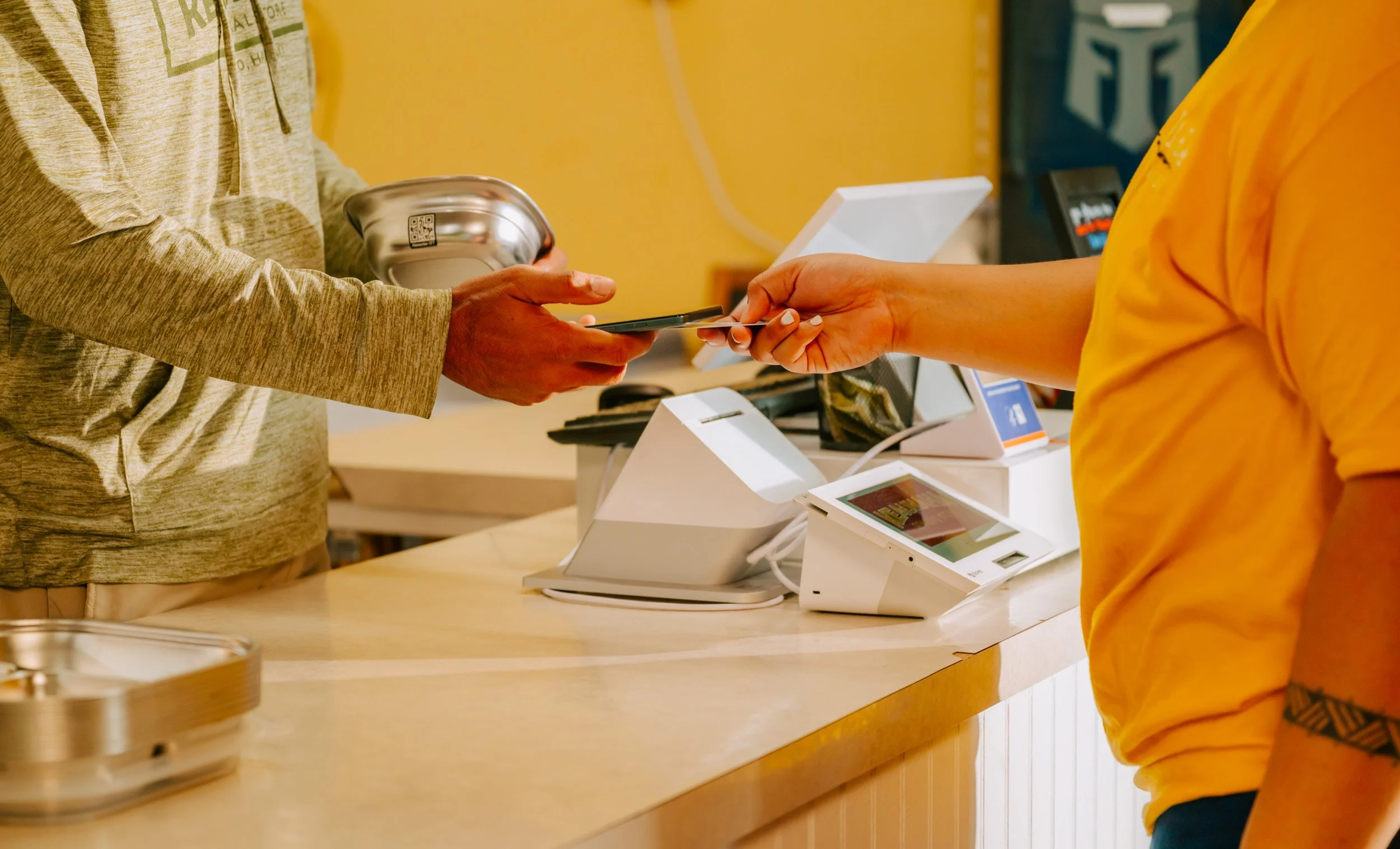
Order your food and drink at a participating location, and simply “Tap-to-Borrow.” The cashier will scan the QR code on your stainless steel dish, and prompt you to tap your payment method to their mobile scanner, finalizing your dish “check-out.” Your card or account isn’t charged, as the service is free for customers. However, if your dish is not returned within 7 days, your card will be charged a $15 replacement fee. To receive return date notifications, enter your email at checkout or download the Vytal App.

2. GRIND ALL DA’ ʻONO FOOD CHEE - BROKE DA’ MOUT!
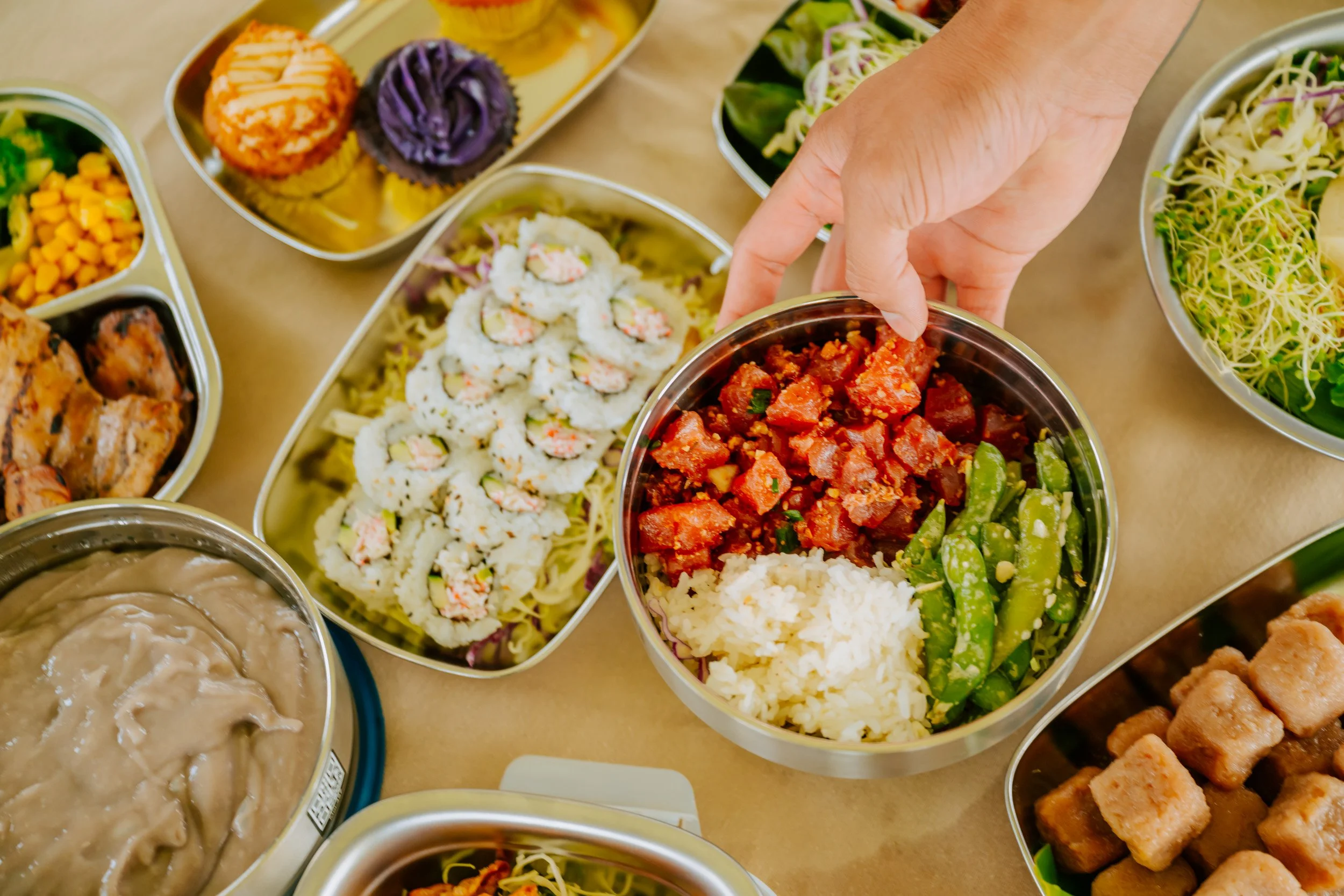
From the alley to the valley, take your Hoʻi cup or dish anywhere, without the hassle or stress of having to “make rubbish” or wash dishes.


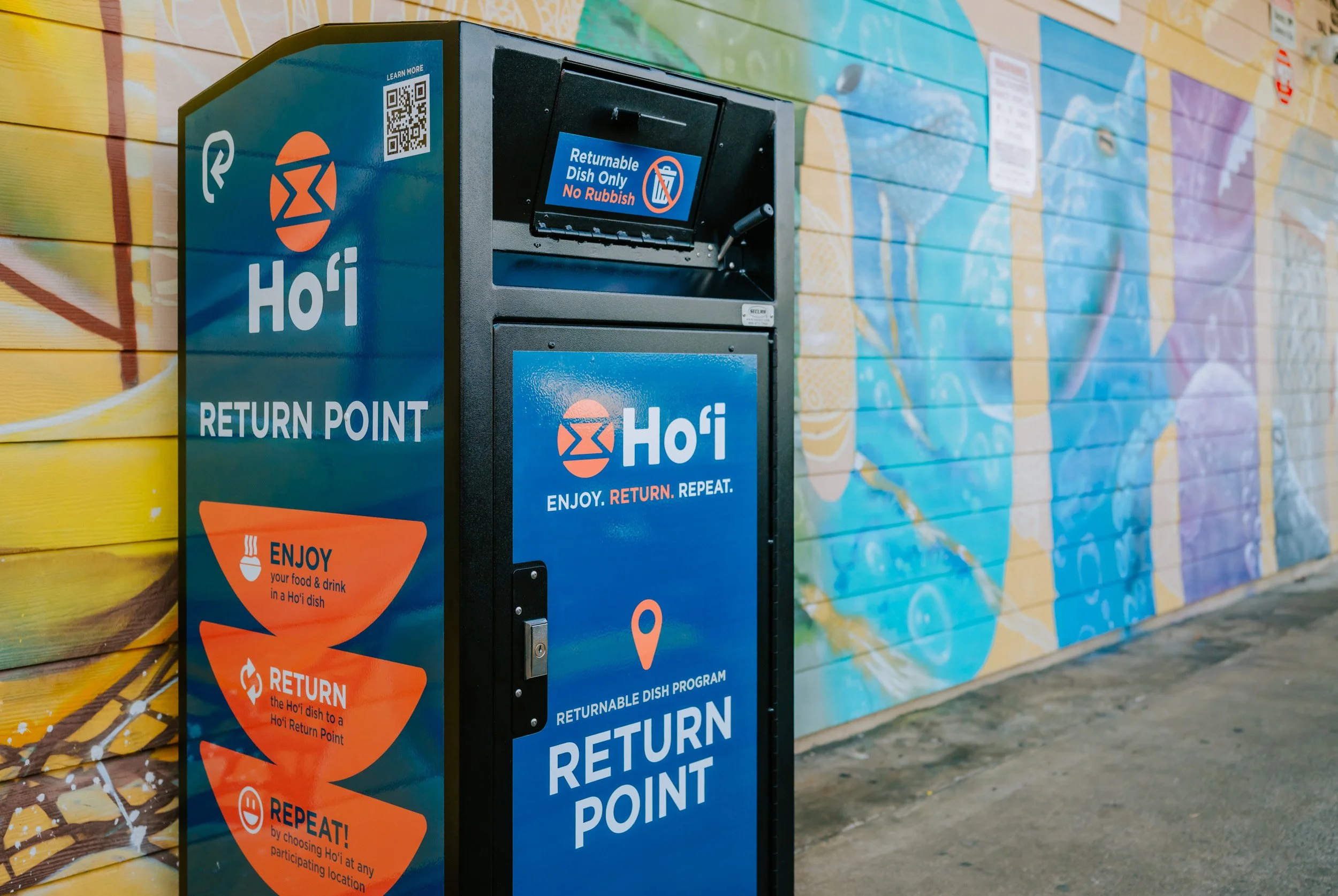
3. QUICK! FIND THE HOʻI BIN & PUT THE DISH INSIDE
Use the Partner Map to view a network of a growning number of outdoor Hoʻi Return Points in Hilo, located on sidewalks, in parks and other commonly used public spaces and everyday locations like KTA Superstores, Abundant Life Natural Foods, and Garden Exchange. You’ll also find return points inside every business that offers Hoʻi! Empty your food waste into the trash and insert your dish into the Return Bin - dirty and all!

4. ALL THE DISHES PILE UP AND GO FOR A RIDE - DOWN TO THE HALE WITH THE REALLY BIG MACHINE - THAT WASHES ALL THE DISHES SO THEY’RE SAFE DRY & CLEAN
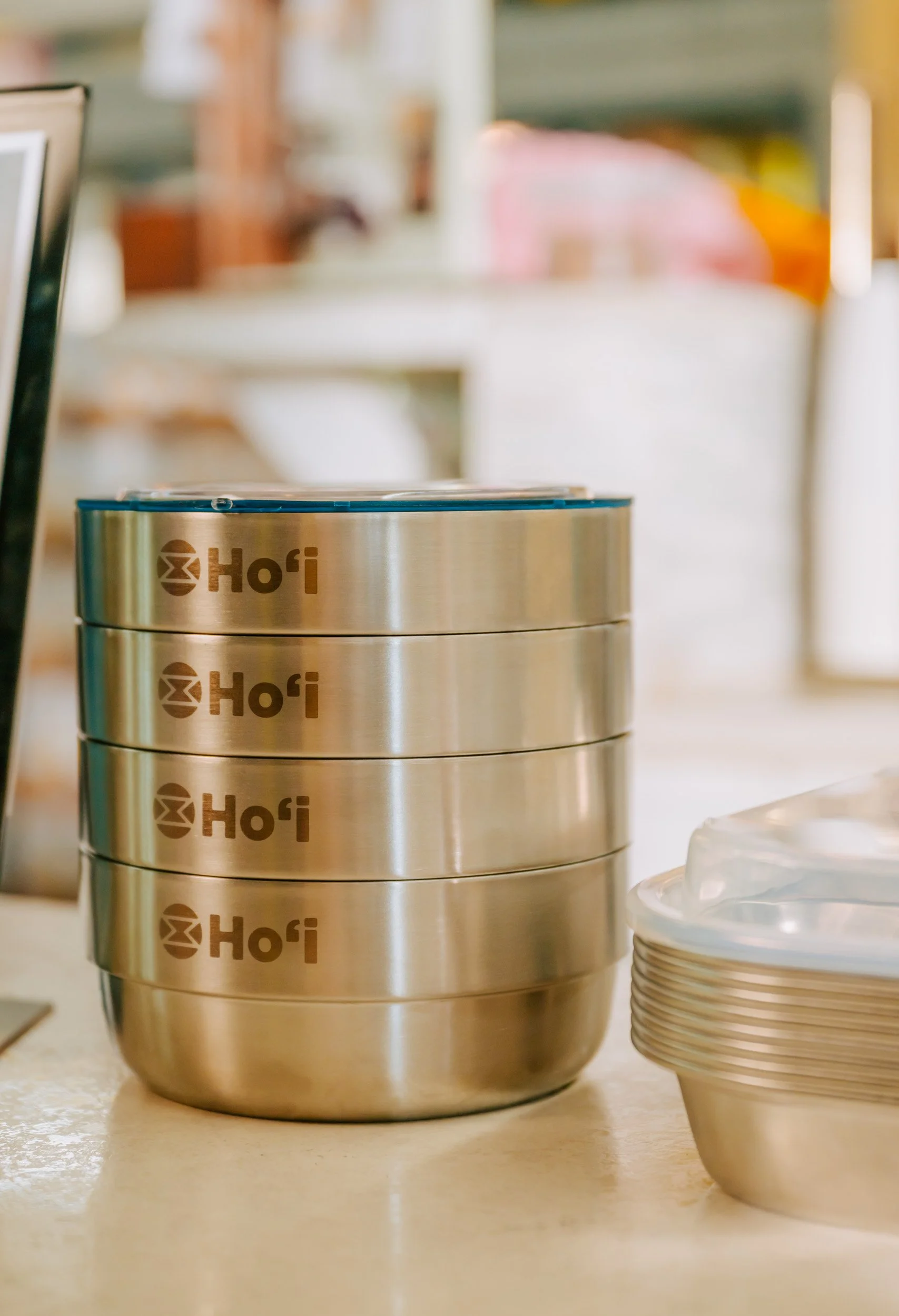
In order to achieve high standards of cleanliness and safety for our Hilo community, the Hoʻi sanitation team works to gather, wash, dry, and inspect each dish in a facility examined and approved by the Hawaiʻi State Department of Health.
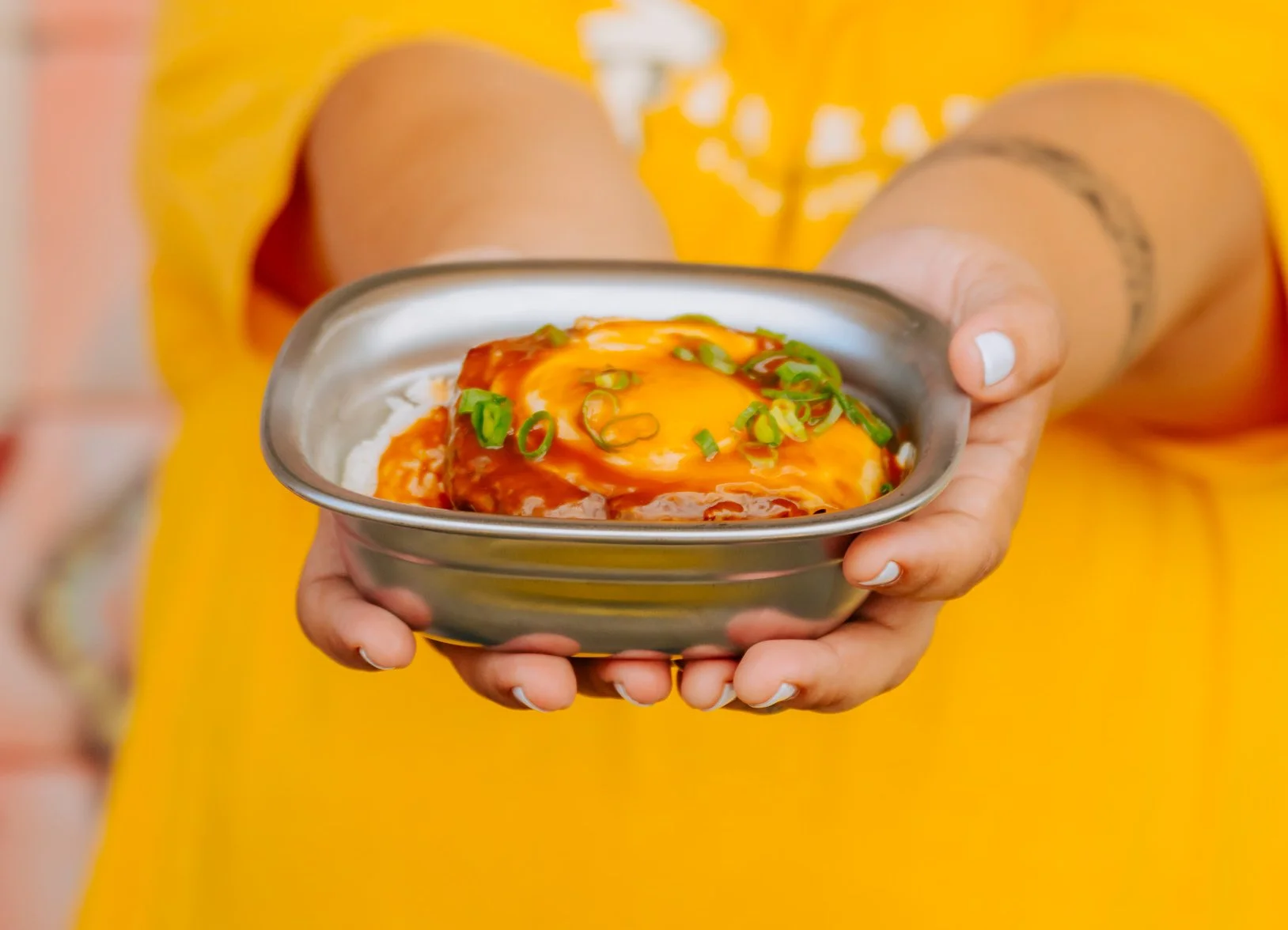

5. THEN THEY’RE USED AGAIN TO HOLD THE FOODS THAT WE EAT
Hoʻi dishes are redistributed to participating restaurants, schools, and organizations, for their customers and patrons to use again and again!


6. CUZ THAT’S HOW HOʻI WORKS; ENJOY, RETURN, REPEAT!
By choosing reusable, we reduce waste, save resources, and care for our community one meal at a time.
Frequently Asked Questions
-
When you order takeout, just ask, “Can I get it in a Hoʻi?”.
At checkout, you’ll pay for your food as usual. Then, you’ll tap your payment method, or use the Vytal app to check out your dish. You’re not charged; you’re simply signing out the container, like a library book. The service is always free as long as you return your dish.
-
No, to use Hoʻi, “Tap-to-Borrow” with just your payment method at checkout. The Vytal app is optional and helps with reminders, return locations, details on your checkouts and all the positive impacts you’ve made by choosing Hoʻi (download it through google play here and through the apple app store here).
-
At our partners, you can get a Hoʻi Card for $30 with a QR code that works just like the app and allows you to check out up to 2 containers at a time.
-
When a food & beverage establishment (restaurant, juice-bar, food truck, etc.) becomes a Hoʻi Partner, their customers can check-out Hoʻi dishes for free, as long as the customer returns the dish to a return point within 7 days. Click here to learn how families, communities, and schools can pay to use Hoʻi dishes in programs, pāʻina (parties), family gatherings, and more.
-
At any Hoʻi Return Point across town. Participating food & beverage establishments have Hoʻi Return Points in their establishments, and there a growing number of public Return Points on sidewalks and in parks. See the Hoʻi Partner Map here. You do not need to return the Hoʻi dish at the location where you checked it out.
-
If you checked out the dish through the Vytal app, you can select the option to extend your checkout. It costs $1 to extend 7 days.
-
If a dish isn’t returned within 7 days, your payment method is charged $15 per item. The replacement fee you pay covers the cost of replacing that container for the program. It is important to return the items to keep the Hoʻi program running well for the larger community.
If you are charged the replacement fee, you can return your item for a partial refund within 30 days of the initial check-out date.
-
In the world of reuse, a “return rate” is the percentage of dishes that are returned to the Dish Program after being used by the community. The higher the return rate, the better! Many countries and programs hold a return rate between 85% and 99%, which means 85% to 99% of dishes that go out, come back. This reflects the high ability of those communities to fulfill their kuleana to the program. In order to keep Hilo’s return rate high, the dishes need to be returned on time.
-
No. Just empty any remaining food/drink and return them as they are. Hoʻi handles all cleaning and sanitation.
Checkout & Return Process
-
Hoʻi is currently available across Hilo, with plans to expand over time based on community demand.
-
Yes! All dishes are commercially washed, sanitized, and inspected at our Hawaiʻi State Department of Health-approved facility before going back into circulation.
-
Yes. Hoʻi dishes are cleaned to the same standards as dishes used in dine-in restaurants and meet strict health and safety requirements. Since Hoʻi uses stainless-steel dishes, they do not leach microplastics or chemicals of concern, unlike single-use plastics. Read more about safety of food packaging at Food Packaging Forum.
-
Please return Hoʻi dishes even if they are damaged. While scratches and dents reflect the character and longevity of each dish, dishes that can no longer be used are removed from circulation and recycled.
-
Click here to learn how families, communities, and schools can pay to use Hoʻi dishes in programs, pāʻina, parties, family gatherings, and more.
Operations
-
Compared to compostables, Hoʻi dishes have a lower environmental footprint in Greenhouse Gas emissions, water use, and waste impacts. On Hawaiʻi Island, most compostable packaging is not composted, but instead, ends up in the landfill where they either stay as they are or decompose and release methane, a potent Greenhouse Gas. Compostable items only reduce waste and benefit the environment if there is proper composting infrastructure in use. Hoʻi reduces waste by reusing containers again and again, which can significantly lower environmental impact compared to single-use options. From a health perspective, many compostables have binding agents that contain chemicals of concern.
Plus, our stainless steel dishes help food retain its flavor, sauce, and temperature in ways that compostables cannot.
-
Yes. Reuse systems like Hoʻi actually reduce waste, water and greenhouse gas emissions by 50% compared to disposable containers.
Benefits
For Businesses and Organizations Serving Food & Beverages
-
Restaurants provide Hoʻi containers to customers at checkout. Hoʻi then collects, washes, and returns clean containers back to the business. If you’re interested in becoming a participating restaurant, contact us.
-
No. Hoʻi handles all collection, cleaning, and redistribution.
-
The cost to participate in Hoʻi is comparable to, and sometimes lower than, compostable packaging. Hoʻi offers several partnership options based on businesses’ needs. Learn more about the pricing here.
Beyond returnable dishes, Hoʻi Partners have access to educational resources and community events that promote the Hoʻi mission of mauli ola hoʻi hou - true wellness through return. Learn more here.
-
Yes! Hoʻi is designed to support restaurants, schools, community organizations, and other groups serving food. Contact us.
-
Excitement for this program is growing. As a participant in the Hoʻi program, your business will be included on a map of restaurants to visit for both locals and tourists. Our stainless steel dishes help food retain its flavor, sauce, and temperature, offering your customers a superior dining experience on-the-go.
-
We understand transitioning workflows in your business can take extra work and we can help! Hoʻi is supported by grant funding to provide assistance for those becoming a Hoʻi Partner. Learn more here.